Tuesday, December 2, 2014
Sustainable Waste Management
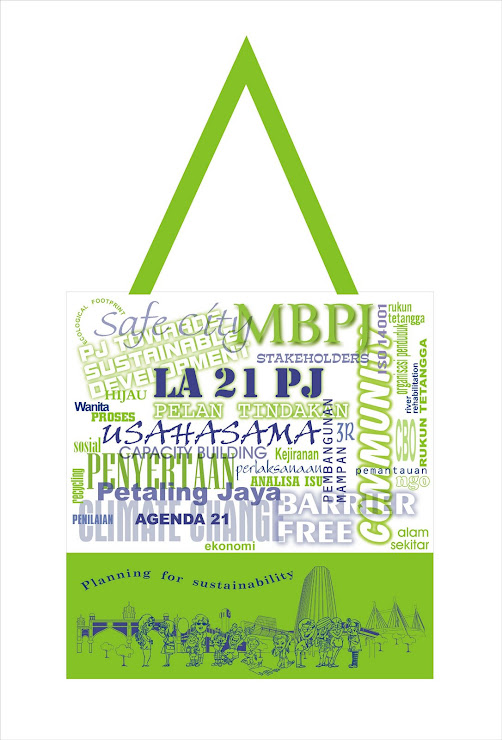
Waste management can be sustained if the planning process is done at the initial stage. End of pipe solution would not make the waste management sustained. It is a complex issue and critical challenge to city manager.


Wednesday, January 1, 2014
Welcome 2014
Despite the anticipated economic downturn and uncertainty in development front for year 2014, life has to move on or else you will become irrelevent as many people would said. I have a wish list in welcoming the year 2014 so that I would not diminish by the high tide of life and society. This includes improving my health, sustaining lifestyle, getting my daughter to improve on her learning skills and knowledge, making sure my parents are in good health and happy, my marriage is getting more harmony and of course my career is getting better from last year. In order to achieve the above, I pledge to work harder, smarter and intelligently with honesty and sincerity. My strategy is to begin early working on my plan and to review any achievements periodically. Hope at the end of the year, I can share with all what I manage to achieve, happily.
Tuesday, December 31, 2013
Flash Back of 2013
Year 2013 is coming to an end now. The year saw a very challenging happenings in everywhere and every sector or every walk of life. We witness the 13th General Election of Malaysia which was the determining factor for the way how any event been handled and targetted for. Everyone was so occupied by the anticipated outcome of any programmes and who the intended target groups are. Achievements were being measured based on visible benefits that people would obtained. Some people labelled these are superficial phenomenum. Things got moving to the normal way only after election, without much politicking.
Petaling Jaya City Council welcomed its first Lady Mayor, Alinah Ahmad. The new mayor brought in with her abundance experiences on housing and property development as well as land administration. A hand on city manager, she believes seeing is believing and no taliking but action first. Under her leadership, changing in administration, management style and approaches are under way and improving for higher efficiency in service delivery.
Year 2013 also saw the efforts on low carbon green city initiative paid off. The innovative Property Assessment Rebate Scheme which is running on 3rd year was conferred the Green Apples Award by the Green Organisation of UK in mid of June 2013. Apart from that, the rain water harvesting programme implemented by the Council well before by law made its a mandatory requirement won the Green Neighbourhood Award conferred by the Ministry of Urban Well Beings, Housing and Local Government. Both awards brought joys and recognition to those working on it, especially the Low Carbon Green City of Petaling Jaya Task Force.
For the first time also, Sustainability Report of Petaling Jaya outlining the achievements of MBPJ in low carbon initiative and sustainable development was published. The Report has been written based on the structure of Low Carbon City Framework as published by the Ministry of Energy, Green Technology and Water or KeTTHA. Although in its infant stage of providing reliable information on carbon emission, it is a try to begin with telling people on achievements that later should be carbon-dimensioned and related.
The inaugural traning session for operators and teachers of kindergarden and nursery in PJ was also conducted. As low carbon green city initiative's capacity building program, the training has dual purposes, namely promoting the environmental education amongst small kids and secondly to green the building or physical premises of the kindergarden or nursery. It is critical and important since long ago, this target group has been neglected when environmental requirement mattered the most.
I have been frequent traveller too throughout the year. Having visited London 3 times, Melbourne and other domestic destination for seminars and conferences. The opportunities given have broadened my perspective, undersanding and knowledge on new emerging trends and challenges as well as serving as a learning curse for the best practices on urbanisation, planning, transportation and etc.
OSC has been moving well with higher record of meetings being achieved since the inception of OSC Unit in 2007. The meetings have managed to provide a platform for fruitful and constructive discussion amongst members on proposed development projects. I am looking forward on 2014 when all submissions include the building plans application will be gone online.
On the family front of OSC Unit, relationship is cordial and dynamic of the group is always there. Enhancing better relationship and working together as a team would be the way forwards for next year.
Certainly I will miss the good memory of 2013.
Thursday, October 31, 2013
Learning City
Learning city means lifelong learning opportunities for everyone either with formal or informal education. Similarly, either learning on applied science or skill learning. With the World getting more complex and demand from the people and community is escalating, the demand for knowledge is also higher especially in the field that might have not been covered under the existing formal education system. Some underprivileged people might also found that attending to formal education is too costly and beyond their affordability. Some might find that certain compulsory subjects are of their disliking. Some might think that they need extra curriculum fulfilling their own need pursuing knowledge. Thereby, a thriving city must be able to provide and cater for multiple learning needs of the people from diverse background. Learning through social media and internet have provided new paradigm to the meaning of learning. Learning can be done with a group of people sharing the same interest and hobby. Learning can be done on real time and with people from different physical community, but rather the cyber world. Learning can be fast with the availability of information over the web. Learning can be multi-discipline and do not necessary follow the sequence. Learning can be fun without the guidance of teachers. Learning can be experiential. For a learning city, the above are required pre-requisite. To make this happen I believe, good and affordable infrastructure especially the ICT, provision of a conducive environment and community for learning must be provided by the city government.
Thriving Neighbourhood
Thriving neighbourhood is visible and can be felt. You can describe a thriving neighbour the moment you step into it space, talking to the people, walking onto the streets, observing many on going and vibrant activities. This scenario cannot be faked and the negative feeling cannot be hide. Thriving neighbour can be built over the years with efforts from all walk of life. The Authority cannot keep telling the people and stakeholders what they intend to do, but to talk to the stakeholders what both can do together. Likewise the stakeholders cannot keep pointing finger on the atuhority for non-perfoming. It must be a mutual understanding and consensus of doing something together. This, of course require share value, vision and actions. Thriving neighbourhood must be a place for everyone, those who want to sleep there, those who want to study, those who want to work and those who want to spend leisure and free time there. Everyone will get to fulfill their need without jeopardising the need of others. All needs can be met and happened in harmony. Everyone will share the vision, value and actions of what they envision their neighbourhood to be in future. As the city is the sum of neighbourhoods, the moment the neighbourhoods doing well and thriving, there is no reason for a city of not performing well. Thereby, making a city thriving, we have no choice but to make sure that neighbourhood, as the basic unit in city ro start and do well.
Wednesday, October 30, 2013
Convergence
Convergence means collaboration between different force from multi-discipline and diverse background. It is also refered to rethinking different ideas and making it a shared one by different contributors of ideas. Some also said convergence is a combination of many multi-facet, ideas or even thoughts for the benefit of bringing greater impact. Convergence is the new paradigm of city, and for the changes and betterment of environment and community. People who are once the receipent of information from the media, now has also become the producer or provider of information. They can choose and pick information relevent to them for consumption. They can even broadcast the news for wider audience. This emerging trend is so powerful that nothing, wrong doing or good things can be hidden from the general public. This, bring in new level of accountability and transparency. For knowledge sharing as well, people can access to information within split second and without much hassle. Thereby, the information providers must ensure that information as published is accurate and update. The urbanisation process is so complex nowasday and it need city management of multi approaches and solution. No single profession can solve the city problem by themselves, but wider collaboration and engagement are required. Convergence, in this sense is critical. We need personal who are good in converge different ideas, meeting different people and able to solicit different ideas and finally to melt and incorporate the ideas into a workable solution, that is understood by all. Perhaps, we need a new profession, the convergent.
Tuesday, October 29, 2013
Melbourne - A Liveable City
Melbourne Knowledge Week held throughout the week in different venue saw the presentation of more than 60 events. The Week saw the presentation of various knowledge gained from initiatives by the Council, Government Agencies, Universities, Private Sector, NGOs and more importantly the community and people. It is fascinating to witness many innovations and creativity on displayed and shared out with others. Melbourne voted as the most liveable city in the World for many years has certainly have many to share. Its planning, management, innovation, administration, social development, environmental and heritage conservation, transportation, education and learning. Walking on the streets is such a wonderful experience that you feel the most welcome and peaceful. Enjoying what on the Collins and Swanston Street are fantastic and bring back good memory. Observing the way construction work is carried out, so neat and tidy will make you refresh on why such a work ethic cannot be achieved back home. It is such a surprise to see a hawker conducting in a pretty small stall, but well managed and clean compared to the escalating high demand for bigger space from our own hawkers. These are perhaps the things we should learn and listen from the mouth of the Melbourne City Council. I am eargerly excited to wait for 31st October 2013 when we have the opportunity to meet them up.
Monday, October 28, 2013
Innovation
Henry Ford once said "If I asked my customers what they wanted, they would have said a faster horse." Customers feedbacks are important to evaluate on the performance of your organisation, products or services, but it does not neccessary tell you beyond what they engaged for. If Mr Henry Ford did not think beyond the faster horse, then invention of a motorised vehicle might not become a reality. The history of automobile industry might be deferred to many years later or not at all. This sum up the important of pioneering and innovation. Innovation will come from a great thinker, who dare to think differently and to look at thing from "adnormal" angkle. However, thinking without going into front end innovation process will not make the innovation into a reality. Firstly, the idea must be framed, followed by organising the resources, collecting customer data, understanding the requirements and then selecting a solution. It takes time, persistent and passion. A leader must have the quality of innovation. As Steve Jobs said innovation distinguishes the leader from followers. The leader must be able to illustrate some visionary scene to the followers, and to ensure that the followers are convinced with the illustrations. However, it is easy said than done, and that explained why we have many followers and always have a leader only.
Monday, September 30, 2013
Public Square
The recently opened King’s Cross Square in London raised the interest of discussing public space in the city development. The reversion started with Ken Livingstone, former Mayor of London’s brave decision to reverse the roundabout at Trafalgar Square and return it to the people and now the present Mayor, Boris Johnson whom launched the Great Spaces with the aim of bringing back village into city will see the atmosphere of trust and neighbourliness, the essential ingredient for public realm. To ensure it is truly public space, the city manager must make sure that private control such as security guards and brand advertising is negligible and insignificant. Instead, cosmopolitan sensibility, civic pride, social interaction and sheer enjoyment must be the value to be inculcated and instilled. This is especially important now with the mushrooming of gated communities with their own border and compound. We must create the enthusiasm about shared spaces and develop more and more of them. This is about public riches, not private wealth. With more public riches, the objective of social integration and nation building can be built naturally. Until then, the sense of ownership over the Petaling Jaya city will be remained ambiguous.
Sunday, September 29, 2013
Networking
Networking is about two way communication and mutual respect for both parties rather than one party is trying to get something out of it from the relationship. Networking is like dating. If you meet someone online and keep talking to each other but never ever to meet face to face, then it will not work at the end of the day. Similarly, networking means we start a relationship and followed with cultivating the relationship to a fruitful and meaningful bonding. The question is who do we want to network with? We should apply strategic marketing approach otherwise we will end up with networking with wrong people. First identify who are they and then where to find them and how to introduce yourself. It is priority matter. Secondly, once a meet up started, trying to find some common things for further discussion and interested other to go for second meet up. You must raise the eyebrow of others, and of course the positive impression from the way you behavior, present, talk and making joke, perhaps. Thirdly, you must follow up on useful meetings and importantly be more persistent. Most of the time, you will come across people of calling you for help but disappear from you after thing get done or worst still that they are of opinion that you are not of help to them. If you come across these people, please avoid them at all cost. These are people who would most likely take advantage of you without seriously looking into maintaining the relationship and growing of networking. For this, the last thing to do is do not waste time.
Saturday, September 28, 2013
Renewable Officer
In UK, that is a new profession called renewable officer. The birth of this profession is due to the requirement of each development project to have at least self generating 10% renewable energy at site. The Renewable Officer will assess the installation of renewable method and evaluate its perfomance so as to ensure that compliance to planning permission is observed. This is an interesting development as emerging changes to the World has in turn revolve our thinking, way of doing things and perhaps business model. In other words, nothing is stagnant and unchanged. Everything is subjected to its relevance because of the new changes, new order in the World and of course the eminent changes of environment. Perhaps this is new challenge to many older professions such as engineers, planners, architects, surveyors, lawyers and etc. Either we evolve and embrace new demand or we are out of business.
Friday, September 27, 2013
Low Carbon Energy Planning
Renewable energy is the way forward now because of the escalating price of the fossil fuel and electricity. It is also a requirement to go green now because of the carbon emission has expediting the process of global warming. The World is exploring multiple ways of exploring the cultivation of renewable energy. For countries that consume more energy because of cooling and heating purpose or for the sake industrialisation and development purpose, non-renewable energy, if relying too much on it is definitely not a good strategy. Some cities hve resolved to make it mandatory for buildings and development projects to achieve certain percentage of renewable energy and reduce the carbon emission. For example, in UK it is a legislative requirement that all buildings have to reduce 20% of carbon emission as well as having minimum 10% of renewable energy. Many buildings have installed either solar photovoltaic, solar thermal, heating system, air heating pump system, wind turbine, wind mill or other micropower generation system. The requirement of doing so is embedded in the planning permission. It is a condition for compliance as early as design stage. The developers have to submit building plan incorporating the system and got final approval before building. The Local Authorities will check on compliance upon completion stage. However, now the question is no system or mechanisme have been set to monitor the performance after completion stage and it is not a requirement now to request periodical report from the property owners. Much need to be done now. In Petaling Jaya, the Council has imposed condition for installing rain water harvesting system, but no monitoring mechanisme has been established to monitor the performance or even to verify the existance of the system. For the sake of low carbon green city initiative of PJ, immediate action should be taken or else similar dilemma as in UK will be forthcoming to PJ.
Localising Regional Transportation Infrastructure Planning
When we talked about transportation infrastructure, we will always say the discussion must be in broader view and macro scale simply because there are traffic from externality and the city cannot control the in and out of vehicles from within and also outside of the city. While there are traffic with origin and destination within the city, there are also traffic generated from the city and go out from the city as well as traffic come from elsewhere by passing the city with destination not within the city. Hence, strategic planning when it comes to transportation infrastructure provision is up most important. However, discussing the transportation planning without referring to local condition is also incomplete as although transportation infrastructure should serve the majority and for the good of national and regional context, the interest of local people should not be compromised without any serious consideration. For example, while the rail line is an important component of public transportation network that will lean modal split of travelling towards non private vehicles, the location of station , routing and beam column as well as the scheduling of construction work should have the input and feedback from the local community. This explained why while strategic planning is important in transport infrastructure provision, at time referral to local sentiments and localized issues is unavoidable. The discussion will be getting more complicated if few infrastructure projects with each other inter-linked and present bigger impact will have to be considered at the same time. This might encourage the possibility of power play and private negotiation in discarding projects that might bring in negative impacts to the particular community. It is definitely not an easy task in crystallizing local and individual project and upscale it to the strategic level.
Thursday, September 26, 2013
Strategic Transportation Planning
While transportation infrastructure requires strategic planning, this applies to all spheres of city development. Strategic planning requires visionary planning and macro scale of understanding the issues and solutions before embarking into micro and localized problems and actions. This is critical especially so for the city as all components of city are inter-linked and performance of any one component will affect the others. For example, if a neighbourhood area is not served well with an efficient transportation system, then urban problems such as traffic congestion, incompatible land use, safety and health issue will be occurred. Similarly, for an organization without a strategic plan is tantamount to planning to the failure. How can an organization work well if no clear direction and shared vision are put on the table for all stakeholders to understand and uphold to?
Wednesday, September 25, 2013
Power of Change: New Media and New Communities
In the 21st Century, the power of change will be changed tremendously. It is no more a superpower to monopolize the views of others and to dictate what other should do, but rather the community of cyber world will have better say now. The recent turn of event in United States of bombing Syria for example showed that the US Government or even the President without the support of alliance countries and people of America has to think twice and back track from the decision of evading Syria. This power of change is expedite because of the advancement of new media and new community. The social media optimizing the strength of information technology has expedite the way people disseminate information, broadcasting the news, making an informed decision and framing up own opinion towards an issue. There are pros and cons on this. If the information gathered is genuine and trustworthy, then it help to democratize people’s mind and involvement in the society and development process. However, if fault news are circulated without any authenticity checking, then it is a dangerous of creating chaos and conflict. On the other hand, new community away from the community at neighbourhood area is created with the existence of social media. People sharing the same interest or hobby can form their own community or discussion group. Similarly, if a group of people sharing same vision and passionate about doing some common things, they will use social media as a platform for discussion and meeting or even planning an event together without physically attending to a meeting room. How should we call this kind of community? They are definitely different from the community we know of. Traditionally, community are created because everyone is staying in a place, sharing public facilities and services, using same access road and perhaps going to local school or places of worship together. As time pass on, the sense of community spirit inculcated and getting stronger. They will look after the safety and health issues in their living environment. But with the community in cyber space, will they care about surrounding and happening in their living area? Perhaps it is time now for community in neighbourhood area to change, to adopt to the advancement of technology and apply it in the daily routine, communication, planning and monitoring and etc. Perhaps it is time to reshape the planning guidelines to facilitate the application of social media in the community planning. Without that, without doubt in near future, our next generation might be saying that my soul is elsewhere although I am physically belong to this neighbourhood. Certainly, we do not want this from happening.
Tuesday, September 24, 2013
Economic Downturn vs. Sustainable Development
We always listen to and discuss about the impact of climate change towards the Earth and human being. We talked about how global warming has melted the iceberg in North Pole and then after the rise of sea water level and the effect of CER reaching 400ppm and beyond. All these are making the World less sustainable. We talked about how to make sustainable development to be sustained further and better. But, who care especially during the economic downturn and financial turmoil crisis now! If majority of the people are adversely affected by their job, income and high inflation that making the cost of living unbearable and reducing their affordability for owning house and better lifestyle for example, certainly we cannot expect them to concentrate their energy and effort on sustainable development. However, unless the notion of achieving sustainable development is also meant to saving one’s pocket without compromising the quality of life, the aim of sustainable development will be distracted because of economic impact. This is the topic of discussion for many in the environmental cycle. The United Nations is taking the lead of initiating a discussion on the impact of global financial and economic crisis on sustainable development. What say you?
Wednesday, June 12, 2013
Competitive Factor of City
Dr Anil Menon of CISCO shared his thought with audience of the IFHP London Congress on competitiveness of a city. He reckoned that 5 criteria are essential for a city to attract talents and investment, and hence the preferred choice of corporate. Firstly, the visionary leadership of city. A city without vision is a city without future. Secondly the readiness of global standard in business dealing. In the absence of global standard, rules and guidelines might be changed more often than one's can imagine. This will become a business risk that many corporate might not want to undertake. Thirdly, smart regulations is critically needed as companies would like to have rules with social and scientific backing. No foolish action is welcome. Forthly, is the presence of public and private partnership policy. While public sector like to reduce cost in providing services or infrastructure, the private sector would like to minimise the risk of doing business. Hence, this policy must be a deciding factor for businesses to make choices. Lastly but not least, it is innovation in economic and ecological system that will attract the attention of investors and talents. In the green era and everyone is pursuing sustainability, it is not a choice for corporates of not embracing the green movement. Perhaps, these thoughts should become the underlying principles for city managers to plan their cities.
Tuesday, June 11, 2013
Tax Value Per Acre
In the City of Raleigh, North Carolina of United States of America, tax value per acre has been applied to calculate the contribution of an area of project towards the coffer of the local council. It is a technique to gauge the bottom line for determining how much spending on infrastructure or extra urban services should be put back to a community. It is a notion of the more you contribute the more you will get. The information is also useful as a tool to communicate with people on contribution of development project. More than often people objected to a development because of the negative impact of development without realising that the project might have tremendous economic contribution. Perhaps it should be used as a tool during discourse with general public on viability of development projects. Having said so, in order to maintain inclusiveness and social justice, spending on infrastructure for poverty eradication or providing affordable housing as well as economic opportunities for vulnerable group should have considerations beyond the tax value per acre only.
Equity Washing
Most of the time we heard about green washing. It means corporates or agencies trying to enhance their image of corporate social reponsibility on good environmental practices, but however with very tokenism real action. Most of the time it is a mere public relation exercise. For the first time in a lecture, I heard about equity washing. According to Mr Mitchell Silver, the Chief Planning and Development Officer of City of Raleigh, North Carolina that equity washing refers to an action of treating the marginalised people with justice and fairness, but in actual it is not but merely an exercise to ambush the public and getting the general public into believing that justice has been done. It is happening daily especially with entities that are financially sound and require a good public image. It is also happening because the vulnerable group, or so called beneficiaries cannot afford to say NO them. It is a struggle that the marginalised people has no bargaining power at all, I think.
Role of Planning
This morning's Openning Ceremony of IFHP Centenary Congress in University College of London saw Mr Mitchell Silver, Past President of American Planning Association delivered an interesting address. He touched on the emerging trend and challenges of planning especially in America and the World in general. He reckoned that "P" is stood for planning and not the process as many planners have forgotten. He highlighted that the role of planning is to pay special concern on the consequences of the present action and of no action. Afterall no action to some issue means yes or consequences to other things. It is not about what actions have been taken but rather the consequences of a particular action that is important and critical. He shared with the audience on different aspiration, demand and need of people in different generation group. The baby boomers group have different idea about themselves and city compared to the X or Y Generation. Thereby, planning without identifying the need and target group is tantamount to failure in planning. He cautioused that the World will see more single unmarriaged family or even family without children. The presence of aging society and other demographic changes will also impact on the model of planning and how the city should response. He ended the talk by urging all audience to to fall back in love with planning again. An appeal that have been loss amongst the planners fraternity, I believe.
Subscribe to:
Posts (Atom)