I have seen many instances of ugly action by individual or organisation. While many have spoken of setting a role model and good example, many of the very same people have not done what they breach. This column will try to highlight these instances. It is not to run down anyone, but to share and to rectify it. If you have come across similar encountering, please do not hesitate to share with others.
"Keeping a clean and tidy interior environment for our car is commendable, but for doing so throwing away the cigarette, paper or even plastic beg onto the road is unacceptable."
However, this is happening on the street everyday.
Saturday, September 4, 2010


Friday, September 3, 2010
Planning Excellence
Planning excellency means not only innovative and efficiency in allocating and mobilising the scarce resources to its best use, but also bearing the social responsibility. While many developers can be excellent in optimising their land potential, not many actually manage to instill the social value which is very much needed and lacking now in the community created by developers. That explained why neighbourliness amongst members of community is fading and even though those so called high environmental quality living areas are not spared from this. What went wrong?
Urban planning now is concentrating on creating livable environment. An environment that is safe, clean and comfortable for staying or at time for playing and leisure. These hard scapes alone however, do not guarantee the creation of a good community that is sustainable and socially responsible towards the environment, climate change, sustainable lifestyle or even the surrounding neighbourhood. For example, it is none of the business of care towards squatter area next to these area.
Urban planning should have enhanced the nation building by integrating people from different divide and socio-cultural background or even economic status. This is always a desire for town planners, I believe. However, the economic factor of property development has always made this desire difficult to achieve. For example, due to cost factor, it is not feasible at all to build affordable houses on hill slope as engineering construction cost is simply too high. With due respect, state intervention is required. Government policies is needed to narrow the gap between different social groups. This include provision of affordable housing stock with cross subsidy from other type of houses. This, however is not the long term solution if house price is escalating higher and faster than the rate of construction of affordable houses and during the slow down of economic period.
Ultimately, it comes back to the spirit of planning excellence. We plan for a good and quality living environment within the carrying capacity of the Earth. While pursuing materialistic and monetary return is unavoidable with the human nature we have, trying to reduce it and reach optimisation should have become the aim of planning excellence. It is no point of having good houses, but cannot afford by the mass. It is unethical to put in so much resources for less people although the concept of 80:20 is getting real now.
Planning excellence means to strike a balance between social, economy and environment. Without one or neglect either one will result in urban sprawl and social injustice.
Urban planning now is concentrating on creating livable environment. An environment that is safe, clean and comfortable for staying or at time for playing and leisure. These hard scapes alone however, do not guarantee the creation of a good community that is sustainable and socially responsible towards the environment, climate change, sustainable lifestyle or even the surrounding neighbourhood. For example, it is none of the business of care towards squatter area next to these area.
Urban planning should have enhanced the nation building by integrating people from different divide and socio-cultural background or even economic status. This is always a desire for town planners, I believe. However, the economic factor of property development has always made this desire difficult to achieve. For example, due to cost factor, it is not feasible at all to build affordable houses on hill slope as engineering construction cost is simply too high. With due respect, state intervention is required. Government policies is needed to narrow the gap between different social groups. This include provision of affordable housing stock with cross subsidy from other type of houses. This, however is not the long term solution if house price is escalating higher and faster than the rate of construction of affordable houses and during the slow down of economic period.
Ultimately, it comes back to the spirit of planning excellence. We plan for a good and quality living environment within the carrying capacity of the Earth. While pursuing materialistic and monetary return is unavoidable with the human nature we have, trying to reduce it and reach optimisation should have become the aim of planning excellence. It is no point of having good houses, but cannot afford by the mass. It is unethical to put in so much resources for less people although the concept of 80:20 is getting real now.
Planning excellence means to strike a balance between social, economy and environment. Without one or neglect either one will result in urban sprawl and social injustice.
Friday, August 13, 2010
PJ Walk
During a workshop discussing the budgetary planning for year 2010 two weeks ago, we spoke about revitalising the city life of Section 52 Town Centre. Yesterday I met an owner of a coffee shop in the State area, he, too spoke about the deteriorating business in the State, which form the core area for Section 52. According to him, business volume is diminishing because people are not coming on day time due to lack of car parking. Fewer people come over on night time because NO activities that attracted them to come. He worried if this trend is continue, he might have to move out from this area. While businesses can come and go, but if the concern came from a man who has been here for the last 40 years, then something should have to be done.
First, we should recognise that State is no more the place that everyone must come unlike previous years. In the past, customers of Hong Kong Bank, UOB Bank, Standard Chartered Bank or even MBSB have to come over as no other branches are available in other parts of PJ. People paying their assessment with MBPJ and quit rent with the Land Office, people taking driving license test with RTD, people applying for passport with the Immigration Department and etc have to come here for their business. Presently, these services are either provided elsewhere or served online in which people need not coming over. So, we have to figure out who are the customer based here and the targeted groups.
Secondly, we should also identify the activities mix in this area. Is the area still offering the important retail activities or moving towards the comparison goods or services? After identifying the availability of services and target groups, then only can we figure out the strength and weaknesses of this area. Upon then only can we further figure out the opportunity and threats for this area.
The normal practice of placing infrastructure first ahead of soft programmes is no more effective. Although building infrastructure is important, many of the time infrastructure alone is not sufficient. Activities that attracted crowd continually are more critical. We saw the popularity of food stall even though it is located in the remote area. We witnessed the big turn out for some concert with popular singers even though it was shown in area with bad transportation connection. In this respect, I am of opinion that Section 52 Town Centre is lacking activities, a unique one rather than infrastructure provision.
While revitalising Menara MBPJ is important, the exercise of doing so cannot be isolated. Any proposal to reactivate the square of Menara MBPJ has to take into consideration of the surrounding and compliment to the area. It is rather dangerous of renovating the square onto some space that compete with the surrounding activities. It is a situation of fish and water. Both cannot afford to go alone.
Last but not least, the exercise of revitalising the area should have incorporated the participation of all stakeholders. It is a plan to fail without the participation of stakeholders and if this happened, then it is tantamount of no plan.
First, we should recognise that State is no more the place that everyone must come unlike previous years. In the past, customers of Hong Kong Bank, UOB Bank, Standard Chartered Bank or even MBSB have to come over as no other branches are available in other parts of PJ. People paying their assessment with MBPJ and quit rent with the Land Office, people taking driving license test with RTD, people applying for passport with the Immigration Department and etc have to come here for their business. Presently, these services are either provided elsewhere or served online in which people need not coming over. So, we have to figure out who are the customer based here and the targeted groups.
Secondly, we should also identify the activities mix in this area. Is the area still offering the important retail activities or moving towards the comparison goods or services? After identifying the availability of services and target groups, then only can we figure out the strength and weaknesses of this area. Upon then only can we further figure out the opportunity and threats for this area.
The normal practice of placing infrastructure first ahead of soft programmes is no more effective. Although building infrastructure is important, many of the time infrastructure alone is not sufficient. Activities that attracted crowd continually are more critical. We saw the popularity of food stall even though it is located in the remote area. We witnessed the big turn out for some concert with popular singers even though it was shown in area with bad transportation connection. In this respect, I am of opinion that Section 52 Town Centre is lacking activities, a unique one rather than infrastructure provision.
While revitalising Menara MBPJ is important, the exercise of doing so cannot be isolated. Any proposal to reactivate the square of Menara MBPJ has to take into consideration of the surrounding and compliment to the area. It is rather dangerous of renovating the square onto some space that compete with the surrounding activities. It is a situation of fish and water. Both cannot afford to go alone.
Last but not least, the exercise of revitalising the area should have incorporated the participation of all stakeholders. It is a plan to fail without the participation of stakeholders and if this happened, then it is tantamount of no plan.
Tuesday, August 3, 2010
Catch22@PJ:Service Apartment
Apartment is referred to multi storeys building with residential purpose. This concept was mooted to overcome the challenge of land shortage in the urban area as well as the emerging and changing life style of people. People nowadays like to enjoy club-alike facilities that are affordable and convenient within the vicinity of their living environment. Hence, apartment is getting popular days by days, simply because people have no choice due to availability or affordability or life style desire.
The concept of service apartment was further developed to take advantage of the development guidelines for apartment during the era of economic difficulty. In late 1990s, when Malaysia was badly affected by global economic downturn, the property market was equally in bad shape and many on going commercial development projects were stopped because of sudden drop of market demand. While commercial properties were not good, the demand for residential units remained strong. Thereby, in order to taking advantage of the residential market demand and to develop in faster pace, the developers built houses onto the commercial land. That's how service apartment came to play and it explained why the concept of service apartment is different from elsewhere. While service apartment is meant for medium-term of at least 7 days stay with services on offer, these include laundry, house keeping and etc, service apartment built then was meant for owner occupied and never of such services were offered. The owners however, are paying commercial rate for their assessment rate, water tariff and electricity bill and even the maintenance fee.
Not less than 80% of the total unit for a service apartment project should be kept by the developer, but this is never done so in Malaysia. Many of the service apartment units are built for sale and owner occupied. Some buyers who are unable to differential the differences between apartment and service apartment felt short change lately. This explained why lately there are occupiers of service apartment requested the assessment rate be reviewed and services provided to improve.
This is a Catch 22 situation here. While the building of service apartment is fast gaining popularity because of less procedures involved, the potential buyers should have been given more information and let them making an informed decision. If ample of information be given, such as maintenance cost, rate, utilities tariff and etc, I presume many will think twice before deciding on the purchase. If they have decided to do so, then it is illogical for them to complain about services and rate at later stage.
Of course for those prefer to stay within the commercial area, they will continue buying the service apartment. Of course this will change as well, if the Council decided to provide incentives for building more residential units in the city centre for fear of wasting resources during night time in the city centre.
The concept of service apartment was further developed to take advantage of the development guidelines for apartment during the era of economic difficulty. In late 1990s, when Malaysia was badly affected by global economic downturn, the property market was equally in bad shape and many on going commercial development projects were stopped because of sudden drop of market demand. While commercial properties were not good, the demand for residential units remained strong. Thereby, in order to taking advantage of the residential market demand and to develop in faster pace, the developers built houses onto the commercial land. That's how service apartment came to play and it explained why the concept of service apartment is different from elsewhere. While service apartment is meant for medium-term of at least 7 days stay with services on offer, these include laundry, house keeping and etc, service apartment built then was meant for owner occupied and never of such services were offered. The owners however, are paying commercial rate for their assessment rate, water tariff and electricity bill and even the maintenance fee.
Not less than 80% of the total unit for a service apartment project should be kept by the developer, but this is never done so in Malaysia. Many of the service apartment units are built for sale and owner occupied. Some buyers who are unable to differential the differences between apartment and service apartment felt short change lately. This explained why lately there are occupiers of service apartment requested the assessment rate be reviewed and services provided to improve.
This is a Catch 22 situation here. While the building of service apartment is fast gaining popularity because of less procedures involved, the potential buyers should have been given more information and let them making an informed decision. If ample of information be given, such as maintenance cost, rate, utilities tariff and etc, I presume many will think twice before deciding on the purchase. If they have decided to do so, then it is illogical for them to complain about services and rate at later stage.
Of course for those prefer to stay within the commercial area, they will continue buying the service apartment. Of course this will change as well, if the Council decided to provide incentives for building more residential units in the city centre for fear of wasting resources during night time in the city centre.
Friday, July 30, 2010
Public and Private
Layman will be able to tell us public area means places or facilities that are commonly owned or used by everyone regardless of their status and background and private area means it is exclusively used or owned by somebody who might have claimed the ownership by way of accreditation by the authority. For example, the house owner by virtue of having the land title to show that he is the rightful owner and hence is exclusively for his own possession. Like wise, public space must be a place or facilities that allowed public access or use by way of authorities declaration or owners' permission. For example, the local authority might have gazette the time for parks to be opened to public subjected that certain rules are observed. The shopping complex management might have allowed public access for visitation provided some code of conducts are followed.
What about five foot corridor in front of the shops? This is privately owned public access. Although it is owned by the building owner and it is his responsibility of maintaining it in good order, he has no right to deny public access simply because the corridor has been declared a public corridor with consent from the owner when he submitted his building plan for authority's approval. This allows the local authorities to enforce order and law against those caused obstruction onto the pathway. If similar analogy applied for the shopping complexes or public park in the vicinity of commercial centres or industrial park, what will happen? Although highly hypothetical, we should not discount the possibility of it will happen eventually. Well, we have to think deep into it.
For landed residential property development in which subdivision of land is required, the local planning authority will normally ask the land for public facilities be surrendered. But the question is why this is not done so for multi storeys residential buildings? Some argue that for this type of development, it is governed by the Strata Titles Act in which management corporation is to be established to look after the maintenance of the common properties within the guarded area. Well, presently the property owners not only paying higher assessment rate but also folk out more money for service charge and sinking fund. If the local planning authority has required that public space be surrendered, then I presume it will reduce the service fee. Some might argue that requesting the developer to surrender the public space in a strata property will affect the viability and marketability of the project. Well, owners might have thought about exclusive use of the facilities, but if the service cost is extremely high, they might have thinking of not maintaining the facilities even though it means of sharing the facilities with others. However, the question of management capacity and competency of local authority will arise. Simply many have no confidence of local authority to impose this condition of surrendering the public space and for their upkeep.
The argument can go on and on and a solution will not on sight the soonest.
Whatever the decision made, my concern is always on principle of fairness and equality. We can set a precedence, but that precedence should be known to the public in advance and further to apply in all qualified projects regardless of area, status and project proponents.
What about five foot corridor in front of the shops? This is privately owned public access. Although it is owned by the building owner and it is his responsibility of maintaining it in good order, he has no right to deny public access simply because the corridor has been declared a public corridor with consent from the owner when he submitted his building plan for authority's approval. This allows the local authorities to enforce order and law against those caused obstruction onto the pathway. If similar analogy applied for the shopping complexes or public park in the vicinity of commercial centres or industrial park, what will happen? Although highly hypothetical, we should not discount the possibility of it will happen eventually. Well, we have to think deep into it.
For landed residential property development in which subdivision of land is required, the local planning authority will normally ask the land for public facilities be surrendered. But the question is why this is not done so for multi storeys residential buildings? Some argue that for this type of development, it is governed by the Strata Titles Act in which management corporation is to be established to look after the maintenance of the common properties within the guarded area. Well, presently the property owners not only paying higher assessment rate but also folk out more money for service charge and sinking fund. If the local planning authority has required that public space be surrendered, then I presume it will reduce the service fee. Some might argue that requesting the developer to surrender the public space in a strata property will affect the viability and marketability of the project. Well, owners might have thought about exclusive use of the facilities, but if the service cost is extremely high, they might have thinking of not maintaining the facilities even though it means of sharing the facilities with others. However, the question of management capacity and competency of local authority will arise. Simply many have no confidence of local authority to impose this condition of surrendering the public space and for their upkeep.
The argument can go on and on and a solution will not on sight the soonest.
Whatever the decision made, my concern is always on principle of fairness and equality. We can set a precedence, but that precedence should be known to the public in advance and further to apply in all qualified projects regardless of area, status and project proponents.
Thursday, July 22, 2010
Sustainable City Award

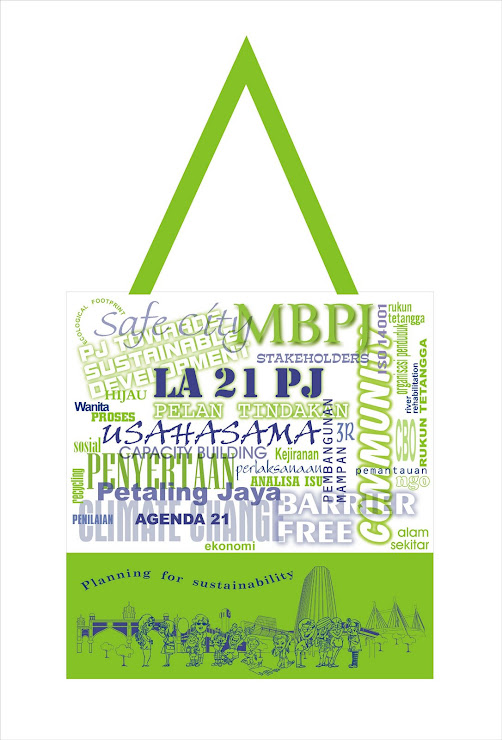
Judges for the Malaysian Sustainable City Award competition visited Petaling Jaya on 24 and 25th June 2010. The purpose was to evaluate the sustainability performance of the Council based on reports and documents submitted. MBPJ together with MPSJ, MP Miri and MB Sibu have been shortlisted this annual award organised by the Ministry of Natural Resources and Environment and Ministry of Housing and Local Government. Apart from briefing, the judges were brought for tour to Beautiful Gates Disabled Centre, SS2 Town Centre, Bukit Gasing Hill, Sungai Way River and SK Sri Kelana, some of the project site under the auspicious of Local Agenda 21 Petaling Jaya initiative.
I believe the judges must be impressed with enthusiasm shown by us as well as our partners in service. One of the significant point to make is the presence and involvement of stakeholders in all projects. I am sure no other areas have seen such dynamism and diverse groups of working together for the betterment of city environment. It is enlightening to see that bottom up rather than top down approach has been widely applied here. The programmes themselves are wide range, from social, neighbourhood, economy to environment at community or city level. Importantly also the sustainability of stakeholders, the most difficult element when it comes to the community development.
Tuesday, July 20, 2010
New Adventure
Since 17/4/2010, I have been entrusted to oversee the operation of One Stop Secretariat of MBPJ. It is an exciting journey for me in furthering the purpose of town and country planning as well as incorporating the principles of sustainable development in actual physical form with impacts on social and economic development.
For the past 2 months and plus, I have been keeping myself busy in familiarising the rules and regulations as well as the procedures. Surprising me, it took some time to right my frame of thoughts on the existing practice with those provided for. For example, I have thought that with local plan in place, it must be very easy of checking the compliance of planning standard and guidelines, but to my surprise many are still fell back to the old practices of "enquiring" the best deal even though it was stated clearly allowable intensity of development in the local plan.
Another excitement was the Council decision in allowing views of public been considered by way of public views hearing session rather than shut the door down completely even though it is allowed for areas within the local plan coverage. Although it is not a mandatory requirement for Council to notify and consult adjoining land owners on proposed development within the vicinity if a local plan has been gazetted, The Council decided to hear them out. I think it is Local Agenda 21 in practice.
Yet another interesting turn of event was the decision of Council to declassify the condition of planning permission for a project recently. This must be the first time that a local planning authority in Malaysia has made known to the public the details of planning approval. I believe in the spirit of good governance and freedom of information, this must be a foresight and way forward, and break through for local governance.
Well, I believe more will to come.
For the past 2 months and plus, I have been keeping myself busy in familiarising the rules and regulations as well as the procedures. Surprising me, it took some time to right my frame of thoughts on the existing practice with those provided for. For example, I have thought that with local plan in place, it must be very easy of checking the compliance of planning standard and guidelines, but to my surprise many are still fell back to the old practices of "enquiring" the best deal even though it was stated clearly allowable intensity of development in the local plan.
Another excitement was the Council decision in allowing views of public been considered by way of public views hearing session rather than shut the door down completely even though it is allowed for areas within the local plan coverage. Although it is not a mandatory requirement for Council to notify and consult adjoining land owners on proposed development within the vicinity if a local plan has been gazetted, The Council decided to hear them out. I think it is Local Agenda 21 in practice.
Yet another interesting turn of event was the decision of Council to declassify the condition of planning permission for a project recently. This must be the first time that a local planning authority in Malaysia has made known to the public the details of planning approval. I believe in the spirit of good governance and freedom of information, this must be a foresight and way forward, and break through for local governance.
Well, I believe more will to come.
Subscribe to:
Posts (Atom)